One Platform, Many Problems: How System Consolidation Quietly Breaks Enterprise Decision-Making
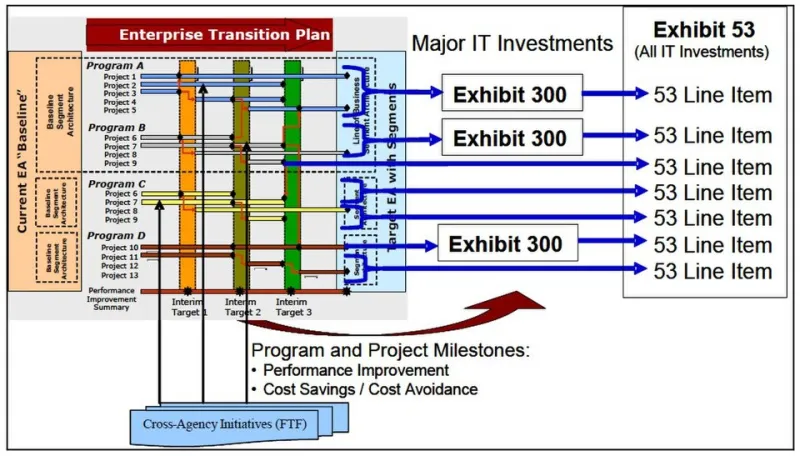
Photo: US GOV OMB, Public domain, via Wikimedia Commons
There is a particular kind of confidence that accompanies a major technology consolidation initiative. Executives announce a unified platform strategy. Implementation partners present elegant architecture diagrams. Stakeholders nod at projected efficiency gains. And then, somewhere between go-live and the six-month mark, something unexpected happens: the business starts moving slower than it did before.
This is not a technology failure in any conventional sense. The systems work. The integrations hold. The dashboards populate. And yet, the organization finds itself in a paradox — more connected than ever, but less capable of acting on what that connection reveals.
Understanding why requires a closer look at what enterprise integration actually does to the humans who depend on it.
The Coherence Assumption
Most consolidation initiatives are built on a foundational assumption: that fragmented systems are the primary obstacle to good decision-making. Remove the fragmentation, the logic goes, and decisions will naturally improve. Unify the data, and clarity will follow.
This assumption is not entirely wrong. Genuine data silos — where critical information exists in isolated systems with no pathway to the broader organization — do impede decisions. There is real value in eliminating redundant tools, reducing integration overhead, and establishing shared data standards.
The problem arises when organizations conflate connectivity with comprehension. A unified platform ensures that data flows between systems. It does not ensure that the data means the same thing to every team receiving it.
In practice, different business units have historically defined their core metrics in ways that reflect their specific operational contexts. Sales teams track pipeline in terms of projected close dates. Finance tracks revenue in terms of recognized bookings. Operations tracks capacity in terms of active engagements. These are not the same numbers, even when they appear in adjacent columns on the same enterprise dashboard.
When a consolidation initiative forces these definitions into a single shared data model, one of two outcomes typically follows. Either the definitions are harmonized — which means some teams lose the granularity they actually need — or the definitions are preserved beneath a layer of unified presentation, which means the dashboard appears coherent while the underlying data remains structurally misaligned.
False Dependencies and the Bottleneck Effect
A mid-market professional services firm headquartered in the Midwest underwent a full CRM and ERP consolidation over an eighteen-month period. Prior to the initiative, regional sales directors had operated with considerable autonomy, drawing on locally managed spreadsheets and lightweight CRM tools to make fast, context-sensitive decisions about client prioritization and resource allocation.
Post-consolidation, those same decisions required data that now lived inside a centralized platform governed by a national operations team. Requests for custom reports — the kind that had previously taken an afternoon to produce — now required formal tickets, data governance review, and a two-week queue.
The firm had not intended to centralize decision authority. The technology architecture simply made decentralized decisions structurally difficult. What had been a distributed, responsive organization became, in practice, a hub-and-spoke model where the hub was perpetually overloaded.
This is the bottleneck effect of forced coherence. When all decisions must pass through a unified system governed by a single data model, the system itself becomes a constraint on organizational velocity.
When Strategic Fragmentation Is the Smarter Choice
The consulting orthodoxy around enterprise technology tends to treat fragmentation as an inherently negative state — something to be remedied rather than managed. But that framing obscures a more nuanced reality: some degree of structural fragmentation is not only acceptable, it is strategically advantageous.
Consider a diversified B2B services organization operating across three distinct verticals: managed IT services, regulatory compliance consulting, and facilities management. Each vertical has its own sales cycle, its own margin profile, its own definition of client health, and its own operational cadence. Forcing these three business units into a single integrated platform does not create coherence — it creates a system optimized for none of them.
A more defensible approach treats integration selectively. Financial consolidation and executive reporting may benefit from a unified data layer. But operational decision-making — the day-to-day choices that drive client outcomes and team productivity — may be better served by purpose-built tools that reflect the actual logic of each business unit.
This is not a failure of ambition. It is a recognition that the goal of enterprise technology is not architectural elegance. It is decision quality.
The Translation Tax
One of the least-discussed costs of system consolidation is what might be called the translation tax: the cognitive and operational overhead required when teams must interpret unified data through the lens of their own operational context.
In a fragmented environment, a regional operations manager pulls a report from a system she knows well, built around definitions her team established. The numbers are immediately actionable.
In a consolidated environment, that same manager pulls a report from a shared platform built around enterprise-wide definitions. Before she can act, she must determine whether the numbers reflect her region specifically, whether the time period aligns with her operational calendar, and whether the metric definitions match what her team actually tracks. Each of these questions requires either institutional knowledge or a conversation with someone who has it.
Multiply this translation overhead across hundreds of decisions per week, across dozens of managers, and the cumulative drag on organizational velocity becomes significant — even if it never appears as a line item on any efficiency report.
A More Disciplined Framework for Integration
Organizations that navigate consolidation successfully tend to approach it with a different set of questions than those that struggle. Rather than asking "how do we unify our systems," they ask "which decisions need to be unified, and which decisions need to be fast?"
This reframing shifts the design conversation from architecture to decision rights. It forces clarity about who owns which decisions, what data those decisions actually require, and whether a shared platform genuinely serves the people making them — or merely the executives reporting on them.
It also creates space for a more honest conversation about governance. Unified platforms require unified governance, and governance has a cost. That cost is not always visible in the business case for consolidation, but it becomes visible in the months following go-live, when teams discover that the system built to accelerate them has introduced new layers of approval, new categories of access restriction, and new dependencies on teams they had never previously needed to consult.
The Harder Question
Enterprise leaders considering consolidation initiatives would benefit from sitting with an uncomfortable question: is the fragmentation we are trying to solve a technology problem, or an organizational design problem?
In many cases, the answer is the latter. Disparate systems are often a symptom of disparate strategies, disparate incentives, or disparate definitions of success. Consolidating the technology does not resolve the underlying misalignment — it simply makes that misalignment harder to see, because it is now buried inside a platform that presents the appearance of coherence.
The organizations that build durable decision-making capability are not necessarily the ones with the most unified technology stacks. They are the ones that have done the harder work of aligning on what they are actually trying to decide, and who is best positioned to decide it.
Platforms follow strategy. When the sequence is reversed, the result is not integration. It is the illusion of it.